
7 practical Cervical Cancer Prevention Facts in Cameroon
Cervical cancer Prevention but what really is the cause before we look at preventions well its primarily caused by persistent infection with high-risk human papillomavirus (HPV). The important point is that having HPV does not mean having cancer: most HPV infections are cleared or controlled naturally by the immune system, while persistent high-risk infections can cause abnormal cervical cells that may eventually become cancerous.
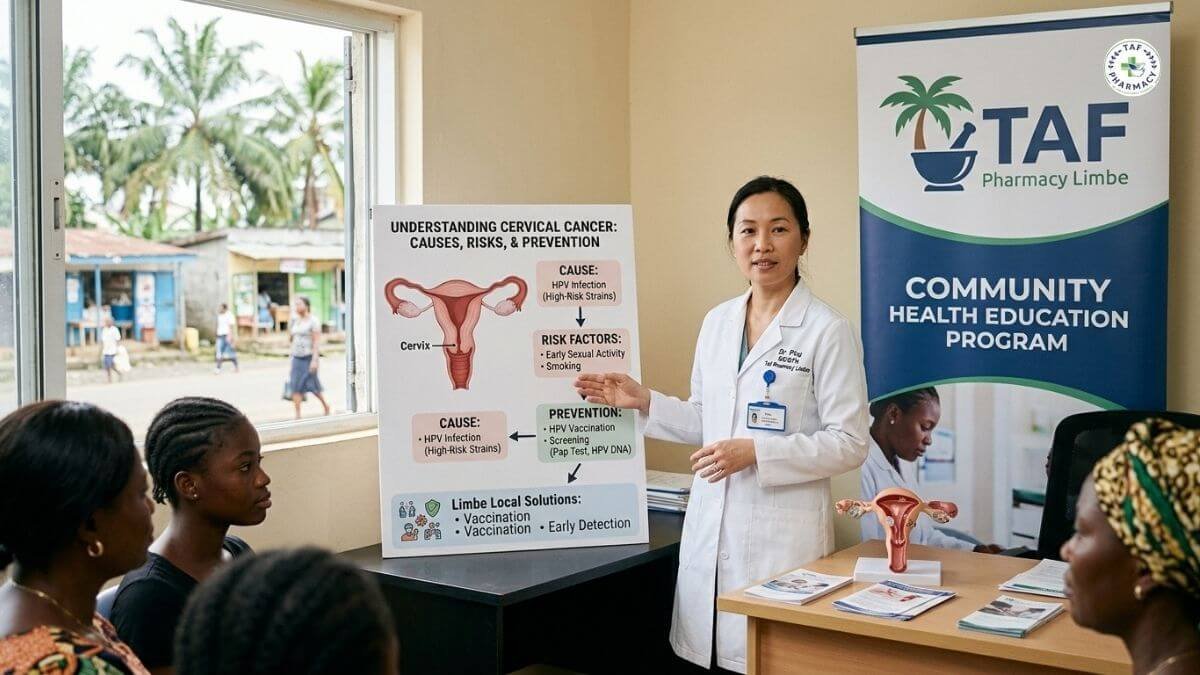
For TAF Pharmacy Limbe, this article builds on the cervical-health education session with Dr. Fuh Afanwi, while connecting those clinical lessons to current guidance on HPV vaccination, cervical screening and prevention. The aim is simple: understand what happens, understand where prevention fits in, and know why early detection matters.
What Is Cervical Cancer?
Cervical cancer is cancer that develops in the cervix, the lower part of the uterus that opens into the vagina. Almost all cervical cancer cases are linked to infection with high-risk types of HPV. But the story does not begin with cancer. For many people, it begins with HPV exposure. HPV is an extremely common virus transmitted through sexual contact. Nearly all sexually active people may encounter HPV at some point in their lives. Most infections cause no symptoms and are controlled or cleared naturally by the immune system, often within one to two years.
The concern arises when a high-risk HPV infection persists for years. Persistent infection can cause changes in cervical cells. Some of these changes are precancerous and, if they are not detected and treated, can eventually progress to cervical cancer. That progression is exactly why prevention and screening matter.
1. HPV Is the Main Cause of Cervical Cancer
Persistent infection with high-risk HPV is the primary cause of virtually all cervical cancers. HPV is not one single virus. It is a group of many different virus types. Some types are considered high-risk because persistent infection with them can cause cancer. Two of the best-known high-risk types are HPV 16 and HPV 18. Together, they are responsible for a large proportion of cervical cancer cases worldwide. This distinction is important: HPV infection ≠ cervical cancer. Most HPV infections do not become cancer. The concern is when a high-risk infection does not clear and remains in the cervical tissue for a long period.
2. Most HPV Infections Are Cleared by the Immune System
One of the most important points from Dr. fuh’s session is that the body can often deal with HPV naturally. Most people who acquire HPV do not develop cervical cancer. Their immune system controls the infection, and it may disappear without causing symptoms or lasting problems. WHO reports that around 90% of HPV infections are controlled by the body itself. This explains why simply testing positive for HPV should not automatically create panic.
Instead, the important questions are:
- Is the HPV type high-risk?
- Is the infection persistent?
- Are there abnormal cervical-cell changes?
- Has appropriate follow-up or screening been completed?
The immune system therefore plays an important role in determining what happens after HPV exposure.
3. Why Does HPV Become a Problem for Some Women?
The key concern is persistent high-risk HPV infection. Think of the process as a sequence:
HPV exposure → immune response → most infections clear → some high-risk infections persist → cervical cell changes → precancer → possible cervical cancer.
Not every person follows the entire sequence. In fact, most HPV infections do not progress to cancer. When high-risk HPV persists, however, it can gradually interfere with normal cervical cells. Over time, abnormal or precancerous changes may develop. This creates something extremely important in cervical cancer prevention:
There can be a window of opportunity before cancer develops.
Precancerous changes can often be detected through screening and treated before they progress to invasive cervical cancer.That is why screening is not simply about finding cancer. It is also about finding problems early enough to prevent cancer.
4. Can Early Sexual Activity Increase the Risk of HPV Infection?
Yes. Beginning sexual activity at a younger age is associated with a greater likelihood of acquiring HPV.
This is not about blaming or judging anyone. HPV is extremely common and can be transmitted through sexual contact. Earlier sexual exposure simply creates an earlier opportunity for exposure to the virus. Other factors can also increase the likelihood that HPV infection will persist or progress, including:
- A weakened immune system
- HIV infection
- Smoking or exposure to tobacco smoke
- Persistent infection with high-risk HPV
- Lack of appropriate cervical screening
A weakened immune system can make it harder for the body to control an HPV infection. Women living with HIV have a substantially higher risk of cervical cancer than women without HIV.
5. Why Are Precancerous Cervical Changes So Important?
Precancerous cervical changes are abnormal cells that have not yet become invasive cancer but may progress if they remain untreated. This is one of the biggest opportunities in cervical cancer prevention.
A woman may feel completely healthy while these cellular changes are developing. Precancerous lesions often cause no symptoms, which means waiting until something feels wrong is not a reliable screening strategy. Screening can identify these changes before they become advanced disease. Depending on the healthcare setting and national recommendations, screening may involve HPV testing, Pap testing/cytology, or visual inspection methods.
WHO’s current guidance places increasing emphasis on HPV testing as a high-performance screening approach.Once an abnormal result is found, appropriate follow-up and treatment can prevent precancerous changes from progressing.
6. How Can Cervical Cancer Be Prevented?
Cervical cancer is largely preventable through HPV vaccination, appropriate cervical screening and timely treatment of precancerous changes.
HPV vaccination
HPV vaccination helps prevent infection with important cancer-causing HPV types. WHO prioritizes HPV vaccination for girls aged 9–14 years, before sexual exposure to HPV, with the exact schedule depending on current national recommendations. The vaccine is designed to prevent HPV infection. It does not treat an HPV infection that someone already has. For parents and guardians, discussing HPV vaccination with a qualified healthcare professional is an important part of protecting girls from HPV-related disease later in life.
Cervical screening
Vaccination does not replace screening. Screening can detect precancerous changes that may be treated before they develop into cancer. WHO recommends organized cervical-screening programmes alongside HPV vaccination.
Safer sexual practices
Condoms can reduce the likelihood of HPV transmission, although they cannot provide complete protection, because HPV can affect skin not covered by a condom.
Avoiding tobacco
Smoking is associated with an increased risk of cervical cancer and can contribute to persistent HPV infection.
7. What Symptoms Should Women Know About?
Early cervical cancer and precancerous changes may produce no symptoms. When cervical cancer becomes symptomatic, possible symptoms include unusual vaginal bleeding and abnormal vaginal discharge.
Possible warning signs include:
- Bleeding between menstrual periods
- Bleeding after sexual intercourse
- Unusual or persistent vaginal discharge
- Other unexplained changes that concern you
These symptoms do not automatically mean cervical cancer. Other conditions can cause similar symptoms. However, unusual or persistent symptoms should not simply be ignored. A qualified healthcare professional can determine what is causing them and whether further testing is necessary.
HPV, Cervical Cancer and Prevention: The Simple Picture
| What happens? | What it means |
|---|---|
| HPV exposure | HPV is extremely common and can be transmitted through sexual contact. |
| Most infections clear | The immune system controls most HPV infections naturally. |
| Persistent high-risk HPV | Some infections remain for years and can cause abnormal cervical-cell changes. |
| Precancerous changes | Abnormal cells can sometimes be detected and treated before cancer develops. |
| Cervical cancer | Persistent high-risk HPV can eventually lead to cancer if precancerous changes progress untreated. |
| Prevention | HPV vaccination, appropriate screening and timely treatment can substantially reduce the risk. |
How Can TAF Pharmacy Limbe Support Cervical Health?
TAF Pharmacy Limbe believes that good pharmacy care begins with accessible, understandable health information.
If you or a family member has questions about HPV, cervical cancer prevention, vaccination, medicines or women’s health, the pharmacy team can provide appropriate pharmacy guidance and help direct you toward qualified healthcare services when further assessment is needed.
For services such as HPV vaccination or cervical screening, contact TAF Pharmacy Limbe first to confirm current availability or ask about appropriate referral options.
📍 TAF Pharmacy Limbe
🕐 Monday–Saturday: 7:00 AM–8:00 PM
💬 Have a health question? Contact TAF Pharmacy Limbe through WhatsApp.
The Bottom Line
Cervical cancer prevention starts before cancer develops.
HPV is extremely common, and most infections are controlled naturally by the immune system. The greater concern is a persistent infection with a high-risk HPV type, which can cause abnormal cervical cells and potentially progress to cancer over time.
That is why three ideas matter:
Prevent HPV where possible.
Screen for cervical changes.
Act early when something abnormal is found.
HPV vaccination and cervical screening are central tools in the global effort to prevent cervical cancer, and early detection can make cervical cancer much more treatable. For women and families in Limbe, Buea and across Cameroon, better information can lead to better health decisions. Know HPV. Know your prevention options. Take cervical health seriously.
About This Article
This article was developed from a cervical-health education session with Dr. Phu and expanded using current guidance from the World Health Organization (WHO) and the U.S. National Cancer Institute (NCI).
The original clinical discussion emphasized HPV as the central cause of cervical cancer, the body’s ability to clear most HPV infections, the importance of persistent high-risk HPV infection, early sexual exposure as a risk factor, the development of precancerous cervical changes, and the role of vaccination and screening in prevention.
This article is intended for general health education. It does not replace medical examination, cervical screening, vaccination advice, diagnosis or treatment from a qualified healthcare professional.
References
- World Health Organization. Cervical cancer. Updated July 3, 2026.
- World Health Organization. Human papillomavirus and cancer.
- World Health Organization. Immunizing against HPV.
- World Health Organization. Screening for cervical cancer.
- National Cancer Institute. Cervical Cancer Causes, Risk Factors, and Prevention.
- National Cancer Institute. HPV and Cancer.
- National Cancer Institute. Cervical Cancer Prevention.
What causes cervical cancer?
Persistent infection with high-risk HPV is the main cause of cervical cancer. Most HPV infections clear naturally, but persistent high-risk infections can cause precancerous cervical cell changes.
Can HPV cause cervical cancer without symptoms?
Yes. HPV infections often have no symptoms, and persistent high-risk HPV can cause cervical cell changes before cancer develops. Regular screening helps detect these changes early.
How can cervical cancer be prevented?
Cervical cancer can be prevented through HPV vaccination, regular cervical screening, safer sexual practices and early treatment of precancerous cell changes.


2 Comments